
Table of Contents
Retrofitting an existing project costs 2-5 times more than new construction, with technical limitations
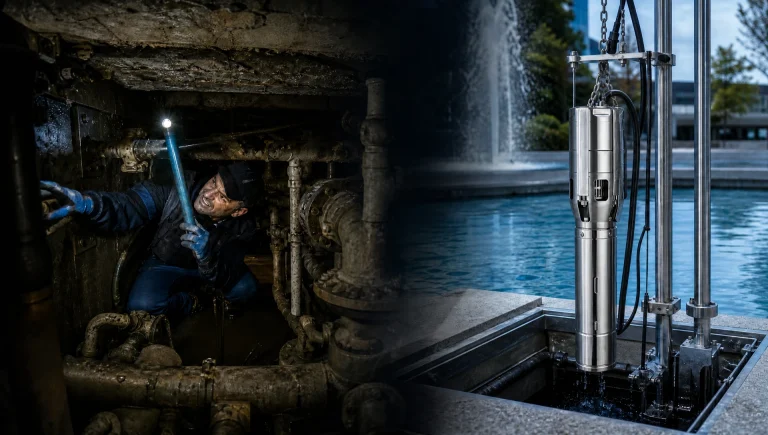
Traditional centralized pump room retrofits (including adding water feature zones, upgrading water effects, expanding performance areas, etc.) face enormous engineering obstacles—the pump room, piping, and control system form an organic whole where pulling one thread moves everything. Adding one water feature zone costs approximately 50,000-100,000 RMB during new construction, but 250,000-600,000 RMB during retrofit (demolition + restoration + pipe laying + construction inefficiency)—a 5-6x difference. The submersible pump solution requires only 50,000-100,000 RMB for post-construction addition (adding one submersible pump + control cable, placed in the pool).
high retrofit cost is not an inevitable fate of traditional high-pressure pumps — the submersible pump technology, with its fully submerged architecture, removes this trigger at the design stage.
In-Depth Technical Analysis
Technical Causes: The Retrofit Dilemma of “Everything Is Connected”
Traditional centralized pump room retrofits face four major engineering obstacles: pump room expansion is nearly impossible, piping modification domino effects, control system expansion complexity, and performance ceiling limitations.
Pump Room Expansion Is Nearly Impossible
A centralized pump room already occupies limited building space (underground/mezzanine) during initial construction. Adding new pump groups means needing more pump room area, but surrounding building structures are typically already fixed. Pump room expansion means: demolishing partial structures, re-doing waterproofing, relocating existing equipment—enormous costs and extended downtime.
The “Domino Effect” of Piping Modifications
Adding a water feature zone means laying a new supply/return pipe from the pump room to the new nozzle location. This pipe may need to traverse completed landscape surfaces, roads, and building structures, requiring excavation, demolition, and restoration during construction—not only is the cost high (retrofit piping cost per meter can reach 5-10 times the initial installation), but it also requires extended area closures.
Control System Expansion Complexity
Adding new pump groups and zones requires adding I/O modules to the existing PLC system, modifying control programs, and re-tuning PID parameters. If the original PLC’s I/O points are exhausted or the model is discontinued, the entire control system may need replacement—a chain upgrade process of “replace one component, then due to incompatibility replace associated components, ultimately replacing half the system.”
Performance Ceiling Limitations
The power of existing pump groups, pipe diameters, and pump room electrical distribution capacity are defined at design time. If you want to increase spray height from 20m to 30m—it may require thicker cables, upgraded transformer capacity, larger pipe diameters, and pump replacement—approaching the scale of rebuilding the entire pump room system.
From an engineering perspective, this is exactly where a submerged architecture changes the picture: the submersible pump technology with its “No Civil Works Needed” design acts directly on the failure chain described above, making the problem structurally unlikely to occur instead of requiring post-event repairs.
Retrofit Cost Comparison—The Numbers Speak for Themselves
- Adding one water feature zone: new construction cost approximately 50,000-100,000 RMB (including pump, piping, control); traditional retrofit 250,000-600,000 RMB (demolition + restoration + pipe laying + construction inefficiency); submersible pump post-construction addition only 50,000-100,000 RMB (adding one submersible pump + control cable, placed in pool).
- Replacing with higher-power pump: traditional solution requires simultaneous cable and distribution upgrade of 150,000-400,000 RMB; submersible pump solution only requires replacing one higher-power submersible pump at 20,000-50,000 RMB.
- Bellagio 2008 energy retrofit: total estimated cost approximately $8 million (2008), far exceeding the reserved $5 million budget, with payback period extended from the expected 2.5 years to 6.8 years.
- Shenzhen hotel jumping jet retrofit: total cost 680,000 RMB—equivalent to 80% of the price of building a new fountain of the same specification, with the plaza closed for 42 days during construction.
On a whole-life-cycle basis the conclusion is the same: projects that choose the submersible pump technology see the “Compatible Interfaces” advantage converted into measurable savings on electricity, maintenance and downtime year after year.
Standards & Compliance
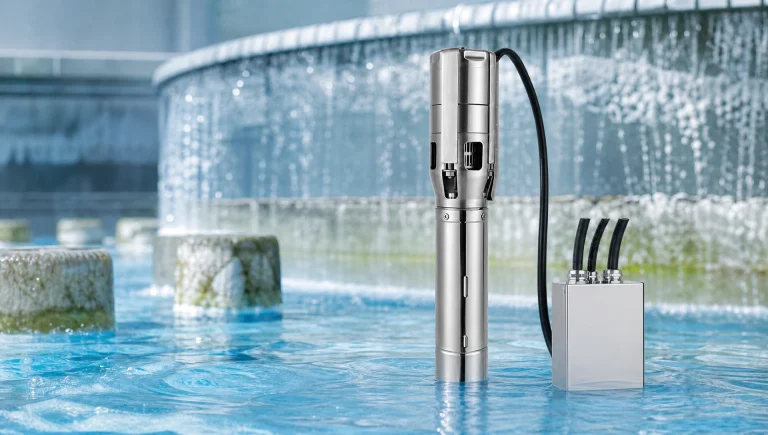
If the submersible pump solution is adopted at initial construction, post-construction upgrades only require: adding a few submersible pumps (placed directly in the water) and updating the control system software—no road excavation, no pump room construction, no new piping. The submersible pump solution inherently possesses “modular expansion” flexibility—no reserved interfaces needed, adding one pump creates a new zone.
International Case Studies
🇺🇸 1. Las Vegas Bellagio — 2008 Energy Retrofit: $8 Million
Project Background: The Bellagio Fountain’s original system was designed with all fixed-speed centrifugal pumps. In 2008, driven by Nevada’s environmental policies and rising energy costs, the operator was forced to consider energy-saving retrofits. The goal was to install VFD control systems to reduce energy consumption.
Equipment Setup: 22 x 300HP horizontal centrifugal pumps + 12 auxiliary pumps, 23,000V high-voltage power supply. All pump groups operate at fixed speed.
Root Cause: All pumps are high-voltage motors (23,000V), and corresponding medium-voltage VFDs (MV VFD) are far more expensive than standard low-voltage VFDs—a single 300HP MV VFD costs approximately $80,000-120,000 (3-5 times the price of low-voltage VFDs). The existing MCC did not support VFD installation, requiring replacement of the entire distribution system. Insufficient electrical distribution space in the pump room meant adding 22 MV VFDs required an additional approximately 300m² distribution room. The fountain had to remain operational during the retrofit, so construction could only proceed in phases, at night.
Consequences & Losses: Total retrofit cost estimated at approximately $8 million (2008), far exceeding the reserved $5 million budget. The retrofit was implemented in phases, with the first phase covering only 8 main pumps (costing $3.5 million). The ultimate retrofit payback period extended from the expected 2.5 years to 6.8 years—ROI far below expectations.
Prevention: If the submersible pump solution had been adopted during the 1998 construction, later retrofits would have been simple—replace with a higher-power submersible pump or add a new pump, with no pipe excavation or electrical distribution expansion needed. Submersible pumps use standard AC380V/AC220V power, and VFDs are standard low-voltage units priced at only 1/5 of MV VFDs. Adding a new pump simply requires finding a vacant spot in the pool, placing it, and connecting cables and nozzle hoses.
Source: MGM Resorts 2008 Capital Improvement Budget; IEEE Large Pump VFD Retrofit Case Study
🇨🇳 2. Shenzhen Hotel — Adding Jumping Jet Feature Retrofit at ¥680,000
Project Background: A five-star hotel in Shenzhen had an existing static water landscape fountain at its entrance plaza (no music, simple water effects). After 3 years of operation, hotel management wanted to upgrade it to a musical jumping jet fountain, adding nighttime performance effects to elevate the hotel’s caliber and appeal.
Equipment Setup: 2 centrifugal pumps + simple timer control, pump room located in a corner of the underground garage with space fully utilized and no room for expansion.
Root Cause: Converting a static fountain to a jumping jet requires: adding multiple pumps, upgrading the control system (from timer to PLC music synchronization control), and laying new fast-acting solenoid valves and piping. The pump room had no spare space for new pump groups, so ultimately a new approximately 15m² pump room was built at the edge of the landscape plaza (requiring plaza demolition, excavation, waterproofing reconstruction, and paving restoration). The original pipe diameter was too small, requiring new DN150 main piping of approximately 80m.
Consequences & Losses: Total retrofit cost 680,000 RMB—equivalent to 80% of the price of building a new fountain of the same specification. Civil works (demolition + new pump room + plaza restoration) accounted for 55% of the cost. The plaza was closed for 42 days during construction, severely impacting the hotel entrance landscape and guests’ first impressions, with management receiving numerous complaints. After retrofit completion, the water effect variation combinations reached only 60% of the ideal scheme due to retrofit constraints.
Prevention: If the submersible pump solution had been adopted at initial construction, upgrading from a static fountain to a musical jumping jet would only require: adding a few submersible pumps (placed directly in the water) and updating the control system software—no road excavation, no pump room construction, no new piping. Estimated retrofit cost: submersible pump solution approximately 120,000-180,000 RMB (adding 6-8 submersible pumps + control upgrade), only 18-26% of the traditional solution’s 680,000 RMB. Construction time: 2-3 days (no civil works) vs. the traditional solution’s 42 days.
Source: Engineering department technical renovation archives of a five-star hotel in Shenzhen; Guangdong Hotel Engineering Association internal exchange materials
🇸🇬 3. Singapore Marina Bay Sands (Positive Case)—Forward-Looking Expansion Provisions
Project Background: The Marina Bay Sands fountain system was designed by WET Design and began operation in 2010. Although it uses a centralized pump room design, the design team considered future expansion needs from the outset, reserving ample expansion interfaces.
Equipment Setup: Pump room area designed at 120% of near-term requirements, with installation positions and pipe interfaces reserved for 4 pumps. All main pipes have DN150 T-connections reserved (sealed with blind flanges). The PLC control system I/O points have 30% spare capacity. Distribution panels have 50% spare breaker positions and cable routing channels.
Root Cause: (Positive case) In 2015, a new water feature zone was added—requiring only one new submersible pump + 2 workers + 1 day, connecting to the reserved interfaces.
Consequences & Losses: (Comparative data) Expansion cost under $30,000—if no expansion capacity had been reserved at design time, the same retrofit could have cost $150,000-300,000.
Prevention: If budget allows, centralized solutions can also reduce retrofit difficulty by reserving expansion interfaces: pump room area at 120% of long-term demand, main pipe T-connections, PLC I/O points with 30% spare, distribution panels with 50% spare breaker positions. But the submersible pump solution inherently possesses “modular expansion” flexibility—no reserved interfaces needed, adding one pump creates a new zone.
Source: WET Design Engineering Portfolio; Marina Bay Sands Facilities Reports
Avoiding the Problem at Its Root: New-Generation Submersible Pumps
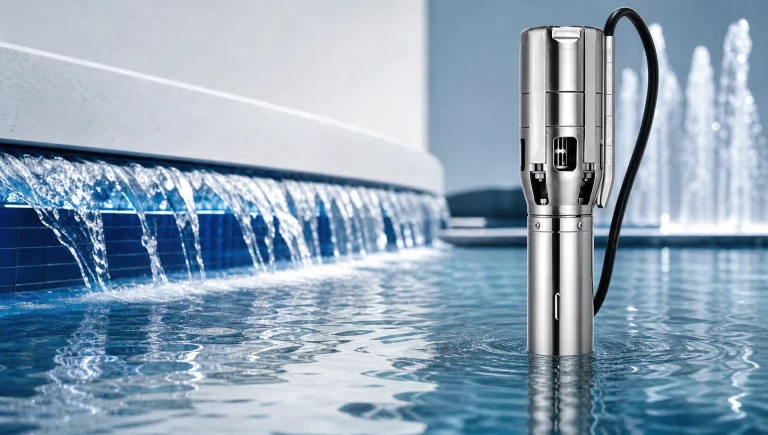
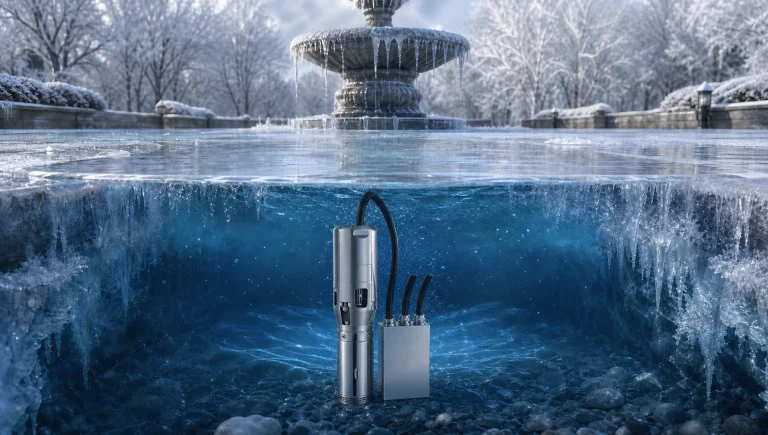
Traditional high-pressure pump retrofits often trigger a chain reaction—pump room modifications, piping re-routing, foundation rebuilding—with costs approaching those of a new system. The submersible pump solution turns retrofit into replacement: the submersible pump technology requires no pump room or main piping modifications, directly replacing in the original position with the discharge outlet connecting to existing nozzle piping. Submerged installation also eliminates foundation and civil works costs; combined with VFD control, spray height and operating modes can be upgraded without changing nozzles. For projects with limited budgets seeking landscape upgrades, this lightweight retrofit path significantly lowers the barrier.
Conclusion & Selection Advice
As the technical analysis and international case studies in this article show, high retrofit cost does not have to be managed reactively. A fully submerged architecture such as the submersible pump technology removes the root cause at the design stage: VFD Upgrade in One Step (Spray height and operating modes smoothly upgraded), combined with No Civil Works Needed and Compatible Interfaces, makes it a strong candidate for both new fountains and retrofits of existing systems.
Owners and designers are advised to run a pump-type comparison early in the project and contact submersible pump technology technical support for a project-specific selection report.
Keywords: Retrofit Cost · Pump Room Expansion · Pipe Modification · Submersible Pump Expansion · Reserved Interfaces
Frequently Asked Questions (FAQ)
Why does fountain retrofitting cost 2-5 times more than new construction?
Four reasons: pump room expansion is nearly impossible (surrounding building structures are fixed, expansion requires demolition + re-waterproofing + equipment relocation); piping modification domino effect (retrofit piping cost per meter reaches 5-10 times initial installation, requiring excavation and demolition of completed landscape surfaces); control system expansion complexity (exhausted I/O points or discontinued models may require replacing the entire control system, creating chain upgrades); performance ceiling limitations (power, pipe diameter, and distribution capacity are fixed at design time, increasing spray height nearly equals rebuilding).
How much does it cost to add a water feature zone?
New construction cost approximately 50,000-100,000 RMB (including pump, piping, control). Traditional retrofit 250,000-600,000 RMB (demolition + restoration + pipe laying + construction inefficiency)—a 5-6x difference. Submersible pump post-construction addition only 50,000-100,000 RMB (adding one submersible pump + control cable, placed in pool). Shenzhen hotel static fountain to jumping jet retrofit total cost 680,000 RMB—equivalent to 80% of the price of building a new fountain of the same specification.
How can you prepare for future retrofits at the design stage?
Marina Bay Sands’ expansion reservation experience: pump room area at 120% of long-term demand; main pipes with DN150 T-connections (blind flange sealed); PLC I/O points with 30% spare; distribution panels with 50% spare breaker positions. Expansion cost under $30,000 (vs. potentially $150,000-300,000 without reservation). But the most thorough solution is submersible pumps—inherently possessing “modular expansion” flexibility, where adding one pump creates a new zone, with no reserved interfaces needed.
How does the submersible pump solution reduce retrofit costs?
Submersible pumps use standard AC380V/AC220V power, and VFDs are standard low-voltage units (priced at only 1/5 of MV VFDs). Adding a new pump simply requires finding a vacant spot in the pool, placing it, and connecting cables and nozzle hoses—no ground demolition, no pump room modification, no pipe excavation. Shenzhen hotel case comparison: submersible pump solution retrofit cost 120,000-180,000 RMB (only 18-26% of the traditional solution’s 680,000 RMB), construction time 2-3 days (vs. 42 days for traditional).
Can the submersible pump technology really prevent high retrofit cost?
Yes. The submersible pump technology operates fully submerged, which removes the fundamental trigger of high retrofit cost at the design level: first, No Civil Works Needed — Direct replacement at original pump position, pump room can be repurposed; second, Compatible Interfaces — Discharge diameter matches existing nozzle piping, minimal modifications; and third, VFD Upgrade in One Step — Spray height and operating modes smoothly upgraded. Instead of managing symptoms, these three design features make the problem structurally unlikely to occur. For project-specific sizing, contact the pump engineering specialists for a full evaluation.
Recommended Solution: submersible pump technology
The submersible pump technology is engineered for continuous fountain operation and structurally avoids the issue discussed in this article — High Cost of Fountain Retrofit: Upgrading an Existing Project Costs 2-5 Times More Than New Construction:
- No Civil Works Needed: Direct replacement at original pump position, pump room can be repurposed
- Compatible Interfaces: Discharge diameter matches existing nozzle piping, minimal modifications
- VFD Upgrade in One Step: Spray height and operating modes smoothly upgraded
Need sizing or engineering support for your project? Contact the the manufacturer through official channels for submersible pump technology technical documentation and project assistance.