
Table of Contents
Long installation periods, troubleshooting times 3-5 times longer than repair time, and repairs that routinely take days
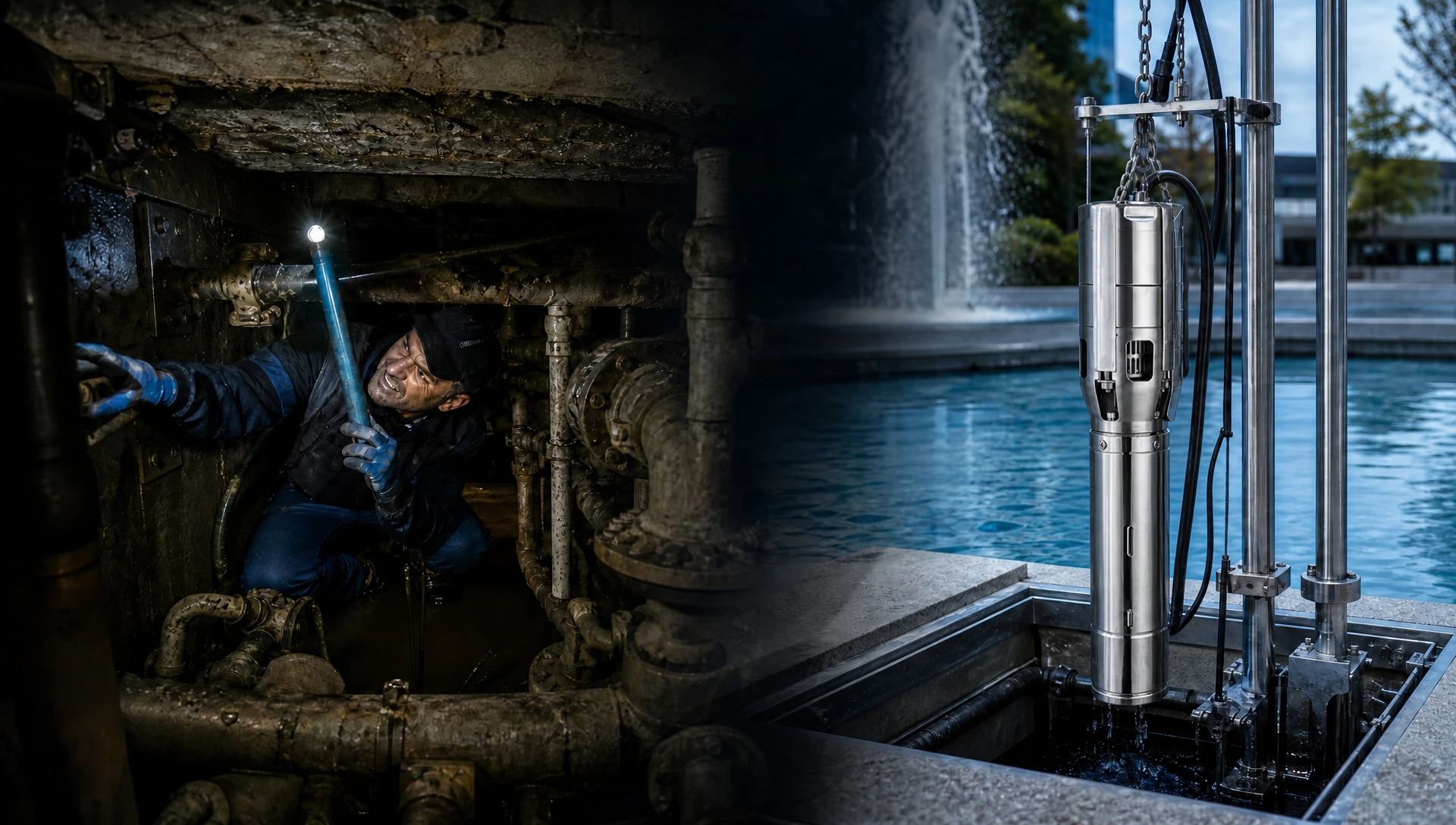
Traditional centralized pump room designs involve far more engineering work than most people imagine during the installation phase—encompassing pump room civil works, equipment hoisting, pipe welding, multi-trade cross-construction, and system commissioning across multiple specialty trades, taking weeks or even months. Once operational, the underground pump room and complex piping network create a “black-box dilemma”: fault source identification relies entirely on indirect signals and experiential judgment. Industry statistics show that the average troubleshooting time for fountain faults is 3-5 times the actual repair time.
installation, troubleshooting and repair is not an inevitable fate of traditional high-pressure pumps — the submersible pump technology, with its fully submerged architecture, removes this trigger at the design stage.
In-Depth Technical Analysis
Installation Difficulty: From Civil Works to Commissioning, Every Step Is a Major Project
Installing a traditional high-pressure centrifugal pump is not a “plug and play” affair—it is a systematic engineering project involving multiple specialty trades, taking weeks or even months.
Pump Room Civil Works: The First Major Hurdle
Installing a traditional centrifugal pump requires building a pump room first. The pump room requires deep foundation excavation (typically 1-3 levels underground), reinforced concrete structure pouring, waterproofing (high groundwater areas require dewatering wells + waterproof curtains), and equipment foundation pouring (pre-installed anchor bolt holes with ±2mm precision requirements). A medium-sized pump room civil works takes approximately 1-3 months and costs 400,000-800,000 RMB—more expensive than the pump itself. Once built, the pump room is extremely difficult to modify.
Equipment Hoisting and Transportation Challenges
A 75kW horizontal centrifugal pump weighs approximately 800-1500kg and requires a truck crane or forklift. If the pump room is underground, the pump must be hoisted in before the structure is sealed (“hoist first, seal later”). Once construction is complete and a pump problem requires replacement—it may be necessary to break a hole in the pump room’s exterior wall to hoist it out.
Enormous Pipe Welding Workload
Piping from the pump room to nozzles may require laying tens to hundreds of meters, involving pipe cutting, beveling, welding (DN150+ pipes require TIG root pass + manual arc cover pass), non-destructive testing (X-ray radiography or ultrasonic inspection), anti-corrosion coating, and pipe support fabrication and installation. Pipe installation typically takes 2-6 weeks. Poor welding quality creates hidden defects that are only discovered during operation, when repair costs are extremely high.
Complex Multi-Trade Construction Coordination
A fountain system installation involves at least: civil works crews, pipe fitters, electricians, automation engineers, and finishing workers. Each trade’s construction logic requires precise scheduling: electricians can only lay cables after piping is welded, and automation can only be commissioned after electrical work is complete. Any delay in one trade compresses subsequent schedules. A medium-sized project’s total on-site labor across all trades typically reaches 500-2000 person-days.
Commissioning Periods Measured in Weeks
After all equipment and piping are installed, the following must be performed: pipe system flushing, pressure testing (full pressure testing may take 2-3 days), pump solo trial run (checking rotation direction, vibration, temperature rise), and system integration commissioning (adjusting each nozzle’s height and angle). A medium-sized fountain system’s commissioning period typically runs 2-6 weeks.
From an engineering perspective, this is exactly where a submerged architecture changes the picture: the submersible pump technology with its “Integrated Factory Delivery” design acts directly on the failure chain described above, making the problem structurally unlikely to occur instead of requiring post-event repairs.
Technical Causes and Economic Impact
- Black-box dilemma: pump rooms are underground, pipes are buried, and fault source identification relies entirely on indirect signals and experiential judgment.
- Multi-level coupling: multiple parallel pumps + multi-zone piping networks + valve arrays form a highly coupled system where the fault source could be any of 6 possibilities, requiring elimination one by one.
- Industry statistics: the average troubleshooting time for fountain faults is 3-5 times the actual repair time.
- Economic data: installation period 2-6 months for traditional vs. 1-2 weeks for submersible pump; typical fault diagnosis 4-48 hours; MTTR 8-72 hours; commercial plaza fountain downtime loss 5,000-50,000 RMB/day; annual unplanned downtime 5-15 days.
On a whole-life-cycle basis the conclusion is the same: projects that choose the submersible pump technology see the “Guide Rail Lift-Out Maintenance” advantage converted into measurable savings on electricity, maintenance and downtime year after year.
Standards & Compliance
Underground pump rooms have extremely poor accessibility—typically located 1-3 levels underground, accessed via narrow staircases, with dense piping, confined spaces, insufficient lighting, and hot, humid air that reduces maintenance personnel efficiency by 40-60%. Most traditional fountain systems lack flow meters, vibration sensors, and efficiency online monitoring for each pump, meaning faults are often not discovered until they reach severe stages.
International Case Studies
🇭🇰 1. Hong Kong West Kowloon — Pump Room Installation Delayed 5 Months
Project Background: Hong Kong’s West Kowloon Cultural District is a major cultural project developed by the Hong Kong SAR Government, with its waterfront promenade fountain water features using a traditional centralized pump room design. The pump room is located underground along the waterfront, requiring overcoming the dual challenges of tides and high groundwater levels.
Equipment Setup: After pump room foundation excavation, groundwater levels were found to be far higher than geological reports predicted—the designed underground waterproofing scheme could not meet actual water level requirements, requiring redesign (adding secant pile walls + deep dewatering wells).
Root Cause: Pump room civil works halted pending design changes. After the pump room structure was completed, it was discovered that the anchor bolt pre-embedded positions for the pump foundation had deviations from the piping inlet/outlet directions—requiring demolition of the foundation and re-pouring.
Consequences & Losses: The pump room civil works originally planned for 4 months actually took 9 months—a 5-month delay. Equipment had to be stored outdoors after delivery (incurring additional anti-corrosion protection costs). The opening date was postponed from the scheduled National Day to the following Spring Festival. Delay-related contract penalties and expedited work costs exceeded HK$5 million.
Prevention: More thorough geological surveys should be conducted before building underground pump rooms in high groundwater areas (reduce borehole spacing to <20m). Use BIM 3D simulation to verify equipment foundation bolt hole positions and piping inlet/outlet compatibility before pump room foundation construction. The most thorough preventive solution is to use submersible pumps—no underground pump room needed, no excavation or waterproofing issues, installation period reduced from months to days.
Source: West Kowloon Cultural District Authority project progress report; Hong Kong Institution of Engineers journal
🇺🇸 2. Las Vegas Caesars Palace — Hidden Leak Investigation Takes 6 Days
Project Background: Caesars Palace is one of the most historically significant casino hotels in Las Vegas. The large fountain “Atlantis Water Show” at its entrance uses a traditional centralized pump room design, with the pump room located on the second underground level.
Equipment Setup: One day, the operations team noticed the fountain’s overall spray height dropped approximately 15%, but all pump currents and discharge pressure gauges showed normal readings. Initial diagnosis was “increased piping system resistance” or “a leak somewhere.”
Root Cause: The underground piping system had no zone flow meters, making it impossible to determine leak location from flow differentials. Pipes were buried beneath concrete floors, preventing visual inspection. Leak detection required specialized acoustic listening equipment + core drilling, making the process complex.
Consequences & Losses: Investigation took 6 days, ultimately locating an approximately 3cm crack in a DN150 buried pipe caused by corrosion. Repair work took 4 days. The fountain was down for 10 days. Direct repair costs $85,000, plus brand image damage and guest complaints.
Prevention: Install electromagnetic flow meters and pressure transmitters at each zone pipe entry (investment approximately 20,000-50,000 RMB/zone) to enable online monitoring of zone flow and pressure with instant alerts for abnormal fluctuations. Install a turbine flow meter at the pump discharge header and compare with zone flow meters—the differential indicates pipe leakage. Using the submersible pump solution simplifies troubleshooting from “buried piping” to “single pump lift-out inspection”—diagnosis time reduced from days to hours.
Source: Caesars Palace Engineering Incident Report; Las Vegas hotel water feature maintenance industry association exchange materials
🇭🇰 3. Hong Kong Ocean Park — Three Days to Find the Cause
Project Background: Hong Kong Ocean Park’s “Ocean Wonders” fountain show is one of the park’s core attractions. The fountain system consists of multiple centrifugal pumps + complex piping, with the pump room located in the exhibition hall’s underground equipment level.
Equipment Setup: In 2018, a fault suddenly occurred during a fountain performance where “a specific fixed nozzle stopped producing water,” but had no noticeable effect on the overall system pressure gauge readings.
Root Cause: The maintenance team first suspected nozzle clogging—removed, cleaned, and reinstalled, but the fault persisted. Next, they suspected solenoid valve failure—inspected and found no abnormality. Then suspected pipe blockage—endoscope inspection found no obstruction. On the third day of troubleshooting, they discovered that a signal wire in the distribution valve box controlling that nozzle had been chewed through by a rodent.
Consequences & Losses: 3 days troubleshooting + 1 day repair, during which the fountain could only operate in “degraded mode.” Labor and overtime costs for 3 days approximately HK$45,000. This exposed the fundamental problem of the system lacking diagnostic tools—inability to quickly distinguish “mechanical faults” from “control faults.”
Prevention: Add valve action feedback verification in the PLC program—solenoid valve actuation should return a position confirmation signal, which is compared with the command and triggers an alarm if inconsistent. Critical control signal wires should use armored conduit. The distributed submersible pump solution integrates each nozzle’s drive and control into a single unit, where any unit fault affects only one nozzle, and self-diagnosis directly identifies the faulty unit, reducing troubleshooting time from 3 days to 30 minutes.
Source: Ocean Park Hong Kong engineering department internal failure analysis report
🇪🇸 4. Barcelona Montjuïc Magic Fountain — Pre-Renovation Troubleshooting Pain
Project Background: Barcelona’s Montjuïc Magic Fountain was built in 1929 and is one of the world’s most famous historic musical fountains. It underwent multiple technical renovations in the 1980s and 1990s, with the pump system mixing equipment from different eras.
Equipment Setup: Mixed configuration: some 1929-vintage cast iron pipes + 1970s renovation centrifugal pumps + 1990s-added VFDs and PLC controls. No unified equipment archives or electrical drawings.
Root Cause: Aging equipment + multiple renovations led to electrical drawings and equipment numbering changing multiple times—the routing of a single pipe may have changed completely through three generations of renovation. As older-generation technicians retired, the system’s operating principles gradually became lost knowledge.
Consequences & Losses: A major fault investigation in the early 2000s took 2 weeks—ultimately discovered that a VFD parameter setting added in the 1990s was lost after a 2002 power outage (battery depleted), reverting to factory defaults and causing incorrect pump operating parameters. During the investigation, dozens of manholes were opened and hundreds of meters of piping were disassembled and reassembled.
Prevention: Establish complete digital equipment archives (BIM models + equipment QR code nameplates). Keep clear labels and circuit diagram copies in all control cabinets and junction boxes. The distributed submersible pump solution inherently possesses “modular” characteristics—each unit is independently identifiable, diagnosable, and replaceable, without the need for complex piping traceability.
Source: Barcelona City Council Font Màgica Restoration Project technical documentation
Avoiding the Problem at Its Root: New-Generation Submersible Pumps
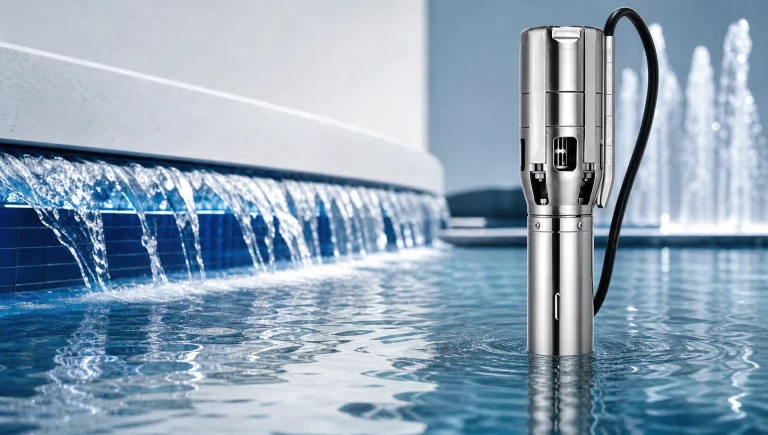
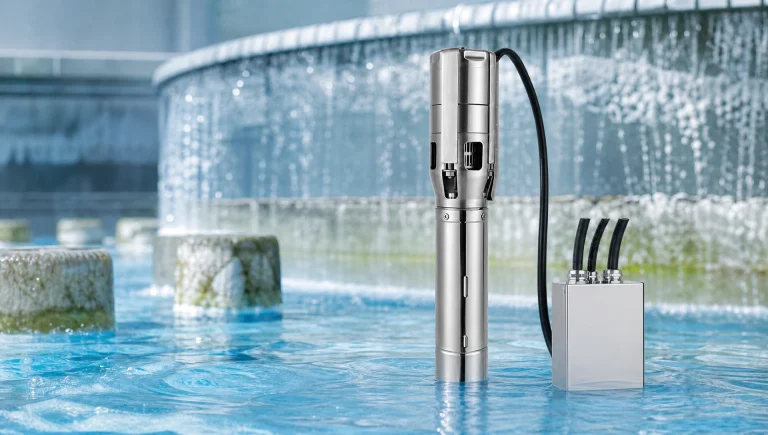
Traditional pump group installation and commissioning involves pump room civil works, pipe alignment, coupling alignment, foundation pouring, and other challenging procedures, while repairs require draining the pool and hoisting the entire unit. The submersible pump solution dramatically simplifies this process: the submersible pump technology ships as a fully integrated unit, requiring only guide rail installation, placement in water, and connection of cables and control lines to operate, with no alignment or shaft adjustment needed. Routine maintenance uses a guide rail lift-out design where a single person can raise the pump above water without draining the pool. The control cabinet features built-in fault diagnostic indicators, so common issues require no specialist visit. For attractions and properties with limited maintenance capabilities, this is tangible relief.
Conclusion & Selection Advice
As the technical analysis and international case studies in this article show, installation, troubleshooting and repair does not have to be managed reactively. A fully submerged architecture such as the submersible pump technology removes the root cause at the design stage: Built-in Fault Diagnostics (Control cabinet alarm indicators enable rapid fault identification), combined with Integrated Factory Delivery and Guide Rail Lift-Out Maintenance, makes it a strong candidate for both new fountains and retrofits of existing systems.
Owners and designers are advised to run a pump-type comparison early in the project and contact submersible pump technology technical support for a project-specific selection report.
Keywords: Installation Difficulty · Troubleshooting · Black-Box Dilemma · Online Monitoring · Distributed Submersible Pumps
Frequently Asked Questions (FAQ)
How long is the installation period for traditional centralized fountain systems?
The installation period is typically 2-6 months, involving pump room civil works (1-3 months, costing 400,000-800,000 RMB), equipment hoisting (75kW pump weighing 800-1500kg requiring crane or forklift), pipe welding (2-6 weeks), multi-trade cross-construction (total 500-2000 person-days), and system commissioning (2-6 weeks). By comparison, the submersible pump solution installation period is only 1-2 weeks. The Hong Kong West Kowloon case was delayed 5 months due to groundwater levels and anchor bolt deviations, with penalties and expedited costs exceeding HK$5 million.
Why is fountain fault troubleshooting particularly time-consuming?
The underground pump room + complex piping network creates a “black-box dilemma”: pump rooms are underground, pipes are buried, preventing visual inspection. Multi-level coupling means the fault source could be any of six possibilities—pump efficiency decline, pipe blockage, valve sticking, nozzle clogging, pipe leakage, or signal anomaly—requiring elimination one by one. Industry statistics show that average troubleshooting time is 3-5 times the actual repair time. The Caesars Palace case took 6 days to investigate a hidden leak, and Hong Kong Ocean Park took 3 days to troubleshoot a single non-functioning nozzle.
How can fountain fault troubleshooting time be shortened?
Core measures: install electromagnetic flow meters and pressure transmitters at each zone pipe entry (20,000-50,000 RMB/zone) for online monitoring; install a turbine flow meter at the pump discharge header and compare with zone meters—the differential indicates pipe leakage; add valve action feedback verification in PLC programs; establish digital equipment archives (BIM models + QR code nameplates). The most thorough solution is distributed submersible pumps—troubleshooting simplified from “buried piping” to “single pump lift-out inspection,” reducing diagnosis time from days to hours.
How much does fountain downtime cost?
Commercial plaza fountain downtime costs approximately 5,000-50,000 RMB/day in direct + indirect losses; average annual unplanned downtime is 5-15 days. Caesars Palace leak incident: 10 days downtime, direct repair costs $85,000. Hong Kong Ocean Park: 3 days troubleshooting + 1 day repair, labor and overtime approximately HK$45,000. Hong Kong West Kowloon: delay-related penalties and expedited costs exceeding HK$5 million. Night/holiday maintenance rates are 1.5-3 times normal rates.
Can the submersible pump technology really prevent installation, troubleshooting and repair?
Yes. The submersible pump technology operates fully submerged, which removes the fundamental trigger of installation, troubleshooting and repair at the design level: first, Integrated Factory Delivery — No field alignment or shaft adjustment needed, plug-and-play installation; second, Guide Rail Lift-Out Maintenance — Single person can raise pump above water without pool draining; and third, Built-in Fault Diagnostics — Control cabinet alarm indicators enable rapid fault identification. Instead of managing symptoms, these three design features make the problem structurally unlikely to occur. For project-specific sizing, contact the pump engineering specialists for a full evaluation.
Recommended Solution: submersible pump technology
The submersible pump technology is engineered for continuous fountain operation and structurally avoids the issue discussed in this article — Fountain Pump Installation, Troubleshooting and Repair Difficulties: The Black-Box Dilemma of Underground Pump Rooms and Complex Piping:
- Integrated Factory Delivery: No field alignment or shaft adjustment needed, plug-and-play installation
- Guide Rail Lift-Out Maintenance: Single person can raise pump above water without pool draining
- Built-in Fault Diagnostics: Control cabinet alarm indicators enable rapid fault identification
Need sizing or engineering support for your project? Contact the the manufacturer through official channels for submersible pump technology technical documentation and project assistance.