
Table of Contents
Motor life shortened to 1/5 of design value — three destructive forces acting in concert
The motor insulation system is the most important yet most vulnerable component of a motor. In fountain environments, the insulation system is simultaneously subjected to three destructive forces: high-humidity environments causing continuously declining insulation resistance, frequent thermal cycling causing “thermal fatigue” in insulation materials, and high-frequency VFD PWM pulses acting as “igniters” for partial discharge. Under this combined triple threat, the actual service life of fountain pump motors is only 20-40% of comparable industrial motors. A motor with a design life of 25 years (based on continuous operation) may actually last only 5-10 years under fountain operating conditions.
motor insulation degradation is not an inevitable fate of traditional high-pressure pumps — the submersible pump technology, with its fully submerged architecture, removes this trigger at the design stage.
In-Depth Technical Analysis
Degradation Mechanisms: Three Destructive Forces Acting in Concert
The insulation system of fountain pump motors simultaneously endures three destructive forces — high humidity, thermal cycling, and PWM harmonics — which mutually reinforce and synergistically accelerate insulation aging.
Threat One: High-Humidity Environment — Continuously Declining Insulation Resistance
The relative humidity in fountain pump rooms is typically 70-95%, far exceeding the design environmental requirements of standard industrial motors (usually <60%). In high-humidity environments, water molecules penetrate the molecular gaps of insulation materials, altering their dielectric properties. Typical consequence: motor insulation resistance drops from the standard requirement of >1 MΩ/kV to 0.1-0.5 MΩ/kV. When insulation resistance falls below 0.5 MΩ/kV, voltage spikes during motor startup or operation can trigger partial discharge, and sustained discharge carbonizes the insulation material, forming conductive paths. The ultimate consequence: phase-to-phase or ground faults → tripping or burnout.
Threat Two: Frequent Thermal Cycling — “Thermal Fatigue” in Insulation Materials
Fountains undergo dozens of start-stop cycles per day, and motor windings experience severe temperature cycling: winding temperature before startup ≈ ambient temperature (30-45°C) → rises rapidly to steady-state operating temperature (100-130°C) within 10-30 seconds after startup → gradually cools over approximately 5-10 minutes after shutdown. Thermal cycling with temperature differentials of 60-100°C repeats 40-240 times per day. The thermal expansion difference between copper conductors and insulation varnish continuously generates shear stress. After hundreds of cycles, microcracks develop within the insulation layer, gradually propagating into discharge paths.
Threat Three: High-Frequency VFD PWM Pulses — The “Igniter” for Partial Discharge
PWM pulses output by VFDs have extremely high voltage slew rates (dv/dt), typically 5,000-10,000 V/μs. When these steep voltage pulses reach the motor windings, voltage distributes nonlinearly among the winding turns — the first few turns bear up to 60-80% of the pulse voltage amplitude. The electric field strength between turns surges, and when it reaches the air breakdown threshold, partial discharge occurs. In humid environments, water molecules in the air lower the breakdown threshold, making partial discharge more frequent. This persistent partial discharge acts like electric sparks “burning holes” in the insulation material — gradually eroding the insulation until a short circuit occurs.
From an engineering perspective, this is exactly where a submerged architecture changes the picture: the submersible pump technology with its “IP68 Fully Sealed” design acts directly on the failure chain described above, making the problem structurally unlikely to occur instead of requiring post-event repairs.
Life Reduction Data
- Arrhenius insulation aging law: for every 10°C increase in temperature, the chemical aging rate of insulation doubles.
- Under typical fountain thermal shock conditions, the insulation accelerated aging factor can reach 5-10 times.
- Under the combined triple threat, the actual service life of fountain pump motors is only 20-40% of comparable industrial motors.
- A motor with a design life of 25 years (based on continuous operation) may actually last only 5-10 years under fountain operating conditions.
On a whole-life-cycle basis the conclusion is the same: projects that choose the submersible pump technology see the “Submerged Cooling” advantage converted into measurable savings on electricity, maintenance and downtime year after year.
Standards & Compliance
The minimum protection rating for motors used in fountain environments should be IP55 (dust + water jet protection), with IP56 (powerful water jet protection) recommended for inverter-driven motors. In high-temperature, high-humidity environments, motors should use Class H insulation (withstand 180°C) rather than the standard Class F (155°C). A du/dt filter or sine wave filter should be installed on the VFD-to-motor output cable.
International Case Studies
🇺🇸 1. Disneyland — “In-Water Motor” Fire Incident
Project Background: In 2016, a water pump motor fire incident occurred at a water feature show area at Disneyland in California, USA. The Disneyland water feature show area includes multiple submersible and land-based pumps, and the incident occurred during a performance, causing considerable alarm and operational disruption.
Equipment Setup: Land-mounted water pump motor, IP54 protection rating, installed near the fountain pool edge. The motor junction box was directly exposed to the water mist environment created by the fountain.
Root Cause: Water vapor infiltrated the junction box through minute gaps in the sealing gasket (water vapor condensation accumulation). Condensation water accumulated in the junction box reduced phase-to-phase insulation to 0.2 MΩ — far below the safety threshold. The voltage stress during motor startup triggered phase-to-phase creepage under low insulation conditions, producing an arc. The arc ignited nearby combustible materials.
Consequences & Losses: After the fire started, the automatic sprinkler system activated, but water mist suppression had limited effectiveness on electrical fires. Direct equipment damage was approximately $120,000. The show area was forced to close for 3 days for comprehensive safety inspections and equipment replacement, with even greater indirect losses (ticket revenue + guest experience degradation).
Prevention: The minimum protection rating for motors used in fountain environments should be IP55 (dust + water jet protection), with IP56 recommended for inverter-driven motors. Motor junction boxes should be filled with waterproof sealant. Anti-condensation space heaters should be installed to maintain winding temperature 5-10°C above ambient during shutdown. Online insulation monitoring systems should be installed to automatically alert and prevent startup when insulation resistance drops below 1 MΩ.
Source: Disneyland Safety Report 2016-017; IEEE Electrical Insulation Conference Proceedings
🇦🇪 2. Dubai Mall — VFD Motor Cluster Burnout Incident
Project Background: The circulation motor group for the indoor waterfall system at Dubai Mall was installed in an equipment mezzanine. Dubai’s summer outdoor temperatures exceed 50°C, and the equipment mezzanine had no air conditioning and poor ventilation, with indoor temperatures consistently above 50°C year-round. Humidity was also persistently high due to water feature evaporation.
Equipment Setup: Seven inverter-driven motors (45-75 kW), IP54 protection rating, VFD-driven. Installation location only 3 m from the waterfall curtain, with continuous water mist exposure.
Root Cause: The 60°C ambient temperature far exceeded the 40°C maximum operating ambient for standard motors — even when not running, the motor’s internal temperature had already reached the insulation thermal class limit. VFD PWM pulses generated additional winding temperature rise (approximately 8-12°C from skin effect losses). The triple threat of high temperature + high humidity + VFD pulses reduced the motor insulation’s Arrhenius life from 25 years to approximately 3 years. No anti-condensation heaters: condensation formed in the junction box overnight, and creepage occurred at the moment of morning startup.
Consequences & Losses: Over 3.5 years of operation, 3 of the 7 motors suffered insulation failures resulting in burnout. The repair cost per motor burnout (motor replacement + installation and commissioning + downtime losses) was approximately AED 100,000-150,000. DEWA (Dubai Electricity and Water Authority) mandated remediation: upgrading insulation class to Class H, installing du/dt output filters, and adding air conditioning systems. Total remediation cost approximately AED 500,000.
Prevention: In high-temperature, high-humidity environments, select Class H insulation (180°C) rather than standard Class F (155°C). Install du/dt filters or sine wave filters on VFD-to-motor output cables (reducing voltage slew rate from 5,000-10,000 V/μs to <500 V/μs). Install forced ventilation or air conditioning at equipment locations (ambient temperature <40°C). Use inverter-duty motors with reinforced insulation systems.
Source: DEWA Incident Investigation Report; Siemens LV Motor Application Guide
🇨🇳 3. Outdoor Fountain in Southern China — Batch Insulation Failures After Typhoon
Project Background: A large municipal plaza fountain in a coastal city in southern China was hit by a super typhoon in the summer of 2018. The typhoon brought heavy rain that caused partial flooding in the pump room (water depth approximately 10 cm). Although the pump room was equipped with drainage pumps and surface cleaning was performed after the water receded, batch motor insulation problems emerged subsequently.
Equipment Setup: Twelve centrifugal pump motors (22-75 kW), IP44 protection rating. The pump room had mechanical ventilation but no dehumidification equipment.
Root Cause: Although standing water was removed after the typhoon, water vapor that had penetrated the motor windings and junction boxes could not be fully dried out. The pump room humidity remained >90% after flooding, and water vapor condensed inside the motors during shutdown to form a “water film.” Two motors restarted within 3 days of flooding tripped on short circuits due to low insulation. The remaining motors subsequently showed insulation resistance dropping below 0.5 MΩ within the following month.
Consequences & Losses: Of the 12 motors, 5 could not operate normally due to excessively low insulation resistance and required removal and return to the factory for oven drying + re-impregnation with insulation varnish. The treatment cost per motor was approximately ¥5,000-8,000, totaling approximately ¥35,000. The fountain was out of operation for nearly 2 weeks after the typhoon, affecting scheduled large-scale performances and celebration events.
Prevention: In coastal, rainy regions, the minimum motor protection rating for fountain applications should be IP55 (IP56 recommended). Install dehumidifiers in pump rooms (humidity <60%) or equip space heaters. Keep anti-condensation heaters powered during motor shutdown. When typhoon/heavy rain warnings are issued, critical equipment should be switched to “moisture-proof mode” in advance (close ventilation, strengthen sealing, activate heaters). Before starting motors under damp conditions, insulation resistance must be measured and confirmed to be >1 MΩ/kV.
Source: Project operator post-typhoon equipment assessment report; Chinese electric motor repair manufacturer technical summary
Avoiding the Problem at Its Root: New-Generation Submersible Pumps
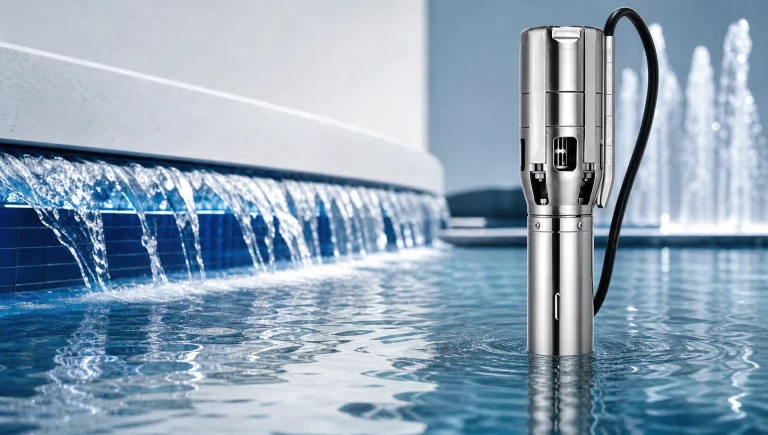
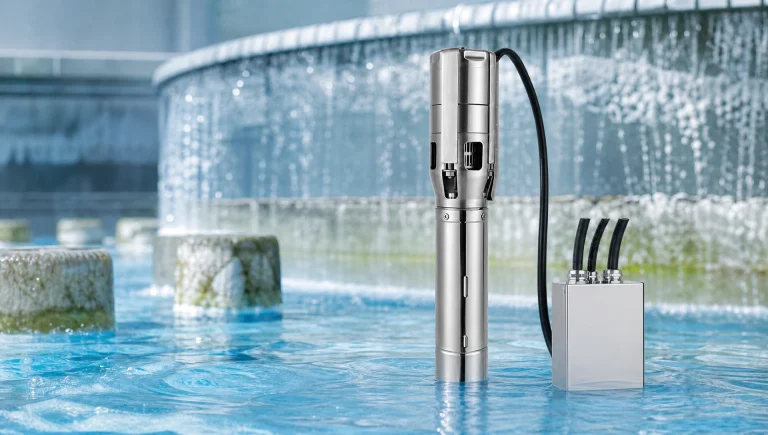
The culprits behind motor insulation degradation are moisture, condensation, and high temperature — traditional pump motors sit in damp pump rooms where condensation during shutdown is practically the norm. The fully enclosed structure of submersible pumps isolates moisture at the source: taking the submersible pump technology as an example, the motor cavity adopts an IP68 fully sealed design, preventing moisture and condensation from entering the windings. Submerged operation provides water cooling, keeping winding temperatures far below those of air-cooled motors and dramatically slowing thermal aging. Combined with high-grade insulation materials and rigorous factory dielectric testing, insulation life is significantly extended. For projects that lose motors to insulation breakdown every year, this is the most direct replacement solution.
Conclusion & Selection Advice
As the technical analysis and international case studies in this article show, motor insulation degradation does not have to be managed reactively. A fully submerged architecture such as the submersible pump technology removes the root cause at the design stage: High-Grade Insulation Materials (Large dielectric margin, with factory dielectric testing on every unit), combined with IP68 Fully Sealed and Submerged Cooling, makes it a strong candidate for both new fountains and retrofits of existing systems.
Owners and designers are advised to run a pump-type comparison early in the project and contact submersible pump technology technical support for a project-specific selection report.
Keywords: Motor insulation · Insulation degradation · Partial discharge · PWM harmonics · Anti-condensation heater
Frequently Asked Questions (FAQ)
Why is fountain pump motor life only 1/5 of the design value?
Three destructive forces acting in concert: high humidity (70-95%) reduces insulation resistance from >1 MΩ/kV to 0.1-0.5 MΩ/kV, with startup voltage spikes triggering partial discharge; frequent thermal cycling (40-240 times per day, 60-100°C differentials) causes thermal fatigue microcracks in the insulation layer; VFD PWM pulses (dv/dt 5,000-10,000 V/μs) produce partial discharge “burning holes” in the first few winding turns. The combined insulation accelerated aging factor of 5-10 times means a 25-year design life motor actually lasts only 5-10 years.
How can fountain pump motor insulation degradation be prevented?
Core measures: minimum protection rating IP55 (IP56 recommended); fill motor junction boxes with waterproof sealant; install anti-condensation space heaters (maintain windings 5-10°C above ambient during shutdown); install du/dt filters or sine wave filters on VFD output (reduce dv/dt to <500 V/μs); select Class H insulation for high-temperature environments; use inverter-duty motors (with reinforced inter-turn and phase-to-phase insulation); install online insulation monitoring systems (alert and prevent startup below 1 MΩ); regularly measure insulation resistance and track trends.
What is partial discharge?
Partial discharge occurs when high-frequency VFD PWM pulses (dv/dt 5,000-10,000 V/μs) reach the motor windings and, due to nonlinear voltage distribution among turns, the first few winding turns bear 60-80% of the pulse voltage amplitude. When the electric field strength exceeds the air breakdown threshold, discharge occurs. In humid environments, water molecules lower the breakdown threshold, making discharge more frequent. Persistent partial discharge gradually erodes insulation material, ultimately leading to short circuit and burnout.
How should fountain motors be restored after a typhoon or heavy rain?
Never restart motors immediately after flooding. Correct procedure: remove all motors for insulation resistance inspection; motors with insulation resistance <0.5 MΩ should be returned to the factory for vacuum oven drying + re-impregnation with insulation varnish; after insulation recovery, partial discharge testing is still required; install dehumidifiers in pump rooms to control humidity below 60%; keep anti-condensation heaters powered during motor shutdown. In a southern China case, 5 motors cost approximately ¥35,000 to treat, with nearly 2 weeks of downtime.
Can the submersible pump technology really prevent motor insulation degradation?
Yes. The submersible pump technology operates fully submerged, which removes the fundamental trigger of motor insulation degradation at the design level: first, IP68 Fully Sealed — Moisture and condensation cannot enter, eliminating insulation breakdown triggers; second, Submerged Cooling — Lower winding temperatures slow insulation thermal aging; and third, High-Grade Insulation Materials — Large dielectric margin, with factory dielectric testing on every unit. Instead of managing symptoms, these three design features make the problem structurally unlikely to occur. For project-specific sizing, contact the pump engineering specialists for a full evaluation.
Recommended Solution: submersible pump technology
The submersible pump technology is engineered for continuous fountain operation and structurally avoids the issue discussed in this article — Fountain Pump Motor Insulation Degradation: Moisture + Thermal Cycling + PWM Harmonics — A Triple Threat:
- IP68 Fully Sealed: Moisture and condensation cannot enter, eliminating insulation breakdown triggers
- Submerged Cooling: Lower winding temperatures slow insulation thermal aging
- High-Grade Insulation Materials: Large dielectric margin, with factory dielectric testing on every unit
Need sizing or engineering support for your project? Contact the the manufacturer through official channels for submersible pump technology technical documentation and project assistance.