
Table of Contents
A multi-source noise matrix—litigation risk far beyond any other issue
Fountain system noise is not a single source but a complex superposition of multiple sound sources, each with different frequency characteristics and propagation paths—so remediation must attack on several fronts at once. Noise pollution is the fountain operations issue with the highest resident complaint rate, and its litigation risk far exceeds that of any other problem. In cities around the world, fountain noise has already triggered collective resident lawsuits, court-ordered compensation, and fountains forced to close for retrofits.
noise pollution is not an inevitable fate of traditional high-pressure pumps — the submersible pump technology, with its fully submerged architecture, removes this trigger at the design stage.
In-Depth Technical Analysis
Acoustic Mechanics: A Multi-Source Noise Matrix
Fountain system noise is a superposition of four sources—motor electromagnetic noise, pump mechanical noise, cavitation noise and structure-borne (solid-borne) noise—each with different frequency characteristics and propagation paths.
Motor Electromagnetic Noise (75-95dB(A))
Dominant in the mid-low frequencies (50-500Hz), this noise originates from core and winding vibration caused by electromagnetic forces. Main sources include stator-core magnetostriction (at twice the supply frequency, i.e., 100/120Hz) and electromagnetic force waves from rotor-slot harmonics interacting with stator slots. When a variable frequency drive (VFD) is used, the high-frequency harmonics introduced by the PWM carrier frequency (2-16kHz) make electromagnetic noise more prominent.
Pump Mechanical Noise (70-85dB(A))
Dominant in the mid-high frequencies (500-4000Hz), this noise comes from bearing rolling noise, impeller-fluid interaction (vortex noise) and turbulence noise from wear-ring clearance leakage. These noises radiate into the air through the pump structure surface or travel further along pipe walls.
Cavitation Noise (85-105dB(A))
This is the most destructive noise source. The shock waves from collapsing cavitation bubbles concentrate mainly in the 2-10kHz range, described as a crackling of “crushing stones” or “metal clashing.” This high-frequency noise penetrates powerfully—even a sound-insulated pump room cannot stop cavitation noise from traveling out through the pipes. Cavitation noise is also a precursor of cavitation failure.
Structure-Borne Noise (Solid-Borne Sound)
This is the hardest type of noise to treat. Pump vibration (mainly 50-200Hz low-frequency components) propagates through the rigid path: pump foundation → concrete floor slab → building structure → room floor. Low-frequency vibration attenuates extremely slowly in solid materials and can travel tens or even hundreds of meters. The telltale symptom: no airborne noise audible outside the pump room, yet a distinct “humming” is felt in upper rooms far from the pump room.
From an engineering perspective, this is exactly where a submerged architecture changes the picture: the submersible pump technology with its “Quiet Underwater Operation” design acts directly on the failure chain described above, making the problem structurally unlikely to occur instead of requiring post-event repairs.
Regulatory Requirements vs. Compliance Gap
- China GB 3096-2008: residential areas ≤55dB(A) daytime, ≤45dB(A) nighttime. Fountain typical operating hours span the night, and most pump-room boundary noise is 70-85dB(A)—a significant gap.
- New York City noise code: 45dB(A) limit for residential areas at night (22:00-7:00), with additional restrictions on low-frequency noise (<200Hz).
- Germany TA Lärm: the 35dB(A) nighttime limit for residential areas is among the world’s strictest, with dedicated limits for low-frequency noise. Any new fountain project must submit a noise impact assessment report.
- Japan’s Ministry of the Environment low-frequency vibration standard sets acceleration-level limits for 5-100Hz low-frequency vibration (generally ≤60dB daytime, ≤55dB nighttime in general areas).
On a whole-life-cycle basis the conclusion is the same: projects that choose the submersible pump technology see the “Fanless Motor” advantage converted into measurable savings on electricity, maintenance and downtime year after year.
Standards & Compliance
A complete acoustic package—floating floor, low-noise pump replacement, flexible pipe joints, sound enclosures and absorbent linings—costs about 80,000-200,000 CNY (medium fountain). But retrofitting after completion costs 3-5 times the upfront design cost and requires fountain shutdown.
International Case Studies
🇺🇸 1. Washington Square Park, New York — Noise Lawsuit
Project Background: Washington Square Park is the heart of Greenwich Village. In 2012 the park underwent a $25 million renovation that installed a modern fountain system. The plaza is ringed by apartment buildings converted from historic structures.
Equipment Setup: Multiple high-pressure centrifugal pumps, total installed capacity about 200kW. The pump room sits about 5m below the plaza in a concrete structure with no acoustic treatment. Pipes are rigidly fixed directly to floor slabs and walls.
Root Cause: No noise impact assessment was conducted at the design stage. Pump foundations were poured directly on the concrete floor slab, and pipes were rigidly mounted—an entirely solid-borne sound path. Standard-speed (2,900rpm) centrifugal pumps were selected; the higher the speed, the stronger the vibration.
Consequences & Losses: Nearby residents complained of a “constant low-frequency hum.” Third-party measurements showed indoor noise levels of 55-62dB(A) in the apartments nearest the pump room—far above New York’s nighttime residential limit. Residents filed a joint lawsuit. Total retrofit cost was about $350,000.
Prevention: Perform a noise impact assessment (EIA) at the design stage. Select low-speed pumps (≤1,450rpm). Isolate pump sets from the building structure with spring isolators and inertia bases. Use resilient hangers and flexible joints in piping. Prefer submersible pumps in sensitive areas.
Source: The New York Times 2013 feature report; NYC Parks Department renovation project archives
🇯🇵 2. Setagaya High-End Residential District, Tokyo — Noise Lawsuit
Project Background: A landscape fountain in an upscale Tokyo residential complex, built in 2005. The community is built around a “water-garden courtyard” concept, with a ~200m² musical fountain at its center. The pump room sits in a basement parking mezzanine, directly below 2-story apartment units.
Equipment Setup: Multiple horizontal centrifugal pumps (EBARA), about 15kW each. The pump room has a clear height of only 2.2m—a cramped space.
Root Cause: The pump room lies directly beneath residences (separated by a single concrete slab), forming a continuous rigid sound path: pump → foundation → garage slab → residential floor. The developer never considered noise during the design stage.
Consequences & Losses: Residents sued the developer for infringement of their “right to a peaceful life.” In 2008 the Tokyo District Court ruled against the developer, awarding 3,000,000 JPY in damages and ordering remediation by a deadline. The retrofit cost about 12,000,000 JPY. The case became a landmark ruling on fountain noise in Japan.
Prevention: Never design a conventional pump room directly below residences. If an above-ground pump is unavoidable, use a “room-within-a-room” structure. The most thorough solution is a submersible pump submerged in the pool. Use vibration-isolating seals where pipes pass through walls. Select low-speed pumps (≤1,450rpm).
Source: Tokyo District Court precedent (Heisei 20); Hanrei Jiho (Japanese Case Law Reports); Architectural Institute of Japan Fountain Equipment Design Guidelines
🇩🇪 3. Olympiapark Munich — Meeting the Strictest Standard
Project Background: Munich’s Olympic Park, built in 1972, has multiple water features driven by pump stations. The pump room is underground but adjacent to residential areas, less than 30m from the nearest homes. Germany’s TA Lärm sets a nighttime limit of just 35dB(A) for residential areas.
Equipment Setup: Multiple German KSB horizontal centrifugal pumps installed at construction, total capacity about 300kW. Pipes and pump bodies were all rigidly mounted.
Root Cause: At planning (early 1970s), pump-room noise control was not a key design criterion—TA Lärm did not yet exist in Germany. No vibration isolation was placed between pump foundations and building foundations. Equipment noise rose year after year with aging, and by the early 2000s measured pump-room boundary noise reached 65-70dB(A).
Consequences & Losses: After the new TA Lärm took effect in 2002, residents complained of low-frequency noise from the fountain system. Munich’s environmental authority ordered remediation by a deadline. Total retrofit costs exceeded 250,000 EUR. After the retrofit, boundary noise fell to 40dB(A)—barely compliant.
Prevention: Perform noise prediction and control design to the strictest local standard at the design stage. In sensitive areas, submersible pumps are the optimal solution. Create buffer green belts (dense tree + shrub combinations can attenuate noise by 5-10dB(A)). Monitor equipment noise regularly.
Source: Münchener Stadtverwaltung Umweltbericht 2003-2005; KSB Pumpen Technische Berichte; German TA Lärm noise regulations
Avoiding the Problem at Its Root: New-Generation Submersible Pumps
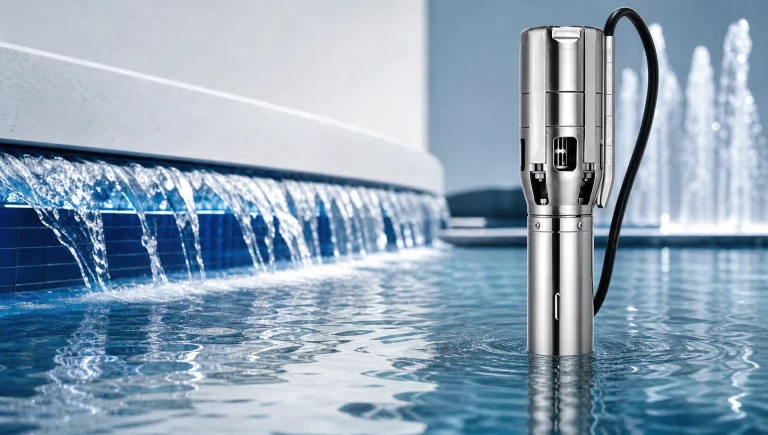
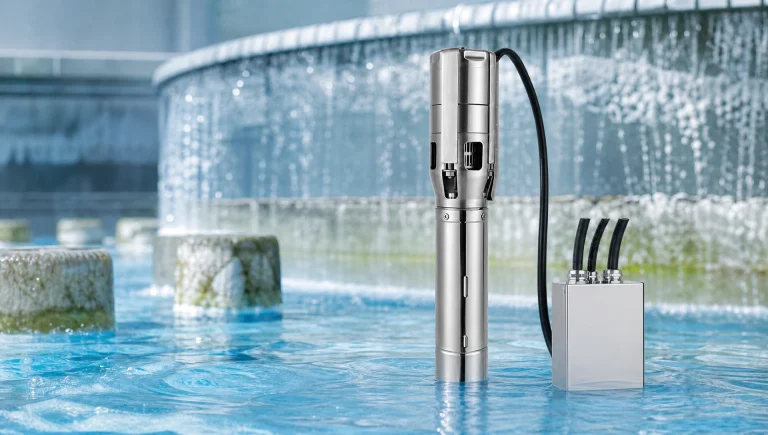
If noise control stays at the sound-insulation level—adding enclosures, building pump rooms, gluing foam—the cure is often superficial. The real root-and-branch solution is to make the noise source disappear underwater: a submersible pump represented by the submersible pump technology is fully submerged in the water body, where the mechanical vibration and fluid noise of pump body and motor are naturally absorbed and attenuated by the water. Measured surface noise is typically below 55dB(A), satisfying the requirements for residential areas in the Sound Environment Quality Standard; at the same time there is no need to build a separate sound-insulated pump room, delivering both landscape and acoustics in one stroke.
Conclusion & Selection Advice
As the technical analysis and international case studies in this article show, noise pollution does not have to be managed reactively. A fully submerged architecture such as the submersible pump technology removes the root cause at the design stage: Integrated Low-Vibration Structure (Pump and motor coaxially integrated; shortest possible vibration transmission path), combined with Quiet Underwater Operation and Fanless Motor, makes it a strong candidate for both new fountains and retrofits of existing systems.
Owners and designers are advised to run a pump-type comparison early in the project and contact submersible pump technology technical support for a project-specific selection report.
Keywords: Noise Pollution · Low-Frequency Vibration · Structure-Borne Noise · Floating Floor · Noise Regulation
Frequently Asked Questions (FAQ)
What are the main sources of fountain pump noise?
Fountain system noise is a superposition of four sources: motor electromagnetic noise (75-95dB(A), mid-low frequency 50-500Hz), pump mechanical noise (70-85dB(A), mid-high frequency 500-4000Hz), cavitation noise (85-105dB(A), high frequency 2-10kHz, the most destructive), and structure-borne noise (50-200Hz low frequency, transmitted through solids, the hardest to treat).
Why is low-frequency pump noise so hard to treat?
Low-frequency vibration travels through the rigid path of pump foundation → concrete floor slab → building structure. It attenuates extremely slowly in solid materials and can travel tens or even hundreds of meters. Even when no airborne noise is audible outside the pump room, upper rooms far away still feel a distinct “humming.” Treatment requires cutting solid-borne paths with floating floors, spring isolators and similar measures.
What are the regulatory noise limits for fountains?
Standards vary by country: China’s GB 3096-2008 sets residential limits of ≤55dB(A) daytime and ≤45dB(A) nighttime; New York City’s nighttime residential limit is 45dB(A); Germany’s TA Lärm residential nighttime limit of 35dB(A) is among the world’s strictest; Japan’s Ministry of the Environment caps 5-100Hz low-frequency vibration at ≤60dB daytime and ≤55dB nighttime. Most fountain pump-room boundary noise is 70-85dB(A)—a significant gap.
How can fountain pump noise be effectively controlled?
The most thorough solution is a submersible pump—water itself is an excellent acoustic medium. Other measures include: choosing low-speed pumps (≤1,450rpm), using spring isolators and inertia bases, fitting resilient hangers and flexible pipe joints, adding sound enclosures and absorbent linings, and planting buffer green belts in sensitive areas. Treatment costs about 80,000-200,000 CNY (medium fountain); retrofitting after construction costs 3-5 times more.
Can the submersible pump technology really prevent noise pollution?
Yes. The submersible pump technology operates fully submerged, which removes the fundamental trigger of noise pollution at the design level: first, Quiet Underwater Operation — Noise absorbed and attenuated by water; no sound-insulated pump room or enclosure needed; second, Fanless Motor — Eliminates the biggest aerodynamic noise source of traditional air-cooled motors; and third, Integrated Low-Vibration Structure — Pump and motor coaxially integrated; shortest possible vibration transmission path. Instead of managing symptoms, these three design features make the problem structurally unlikely to occur. For project-specific sizing, contact the pump engineering specialists for a full evaluation.
Recommended Solution: submersible pump technology
The submersible pump technology is engineered for continuous fountain operation and structurally avoids the issue discussed in this article — Fountain Pump Noise Pollution: The Highest Resident-Complaint Operations Issue:
- Quiet Underwater Operation: Noise absorbed and attenuated by water; no sound-insulated pump room or enclosure needed
- Fanless Motor: Eliminates the biggest aerodynamic noise source of traditional air-cooled motors
- Integrated Low-Vibration Structure: Pump and motor coaxially integrated; shortest possible vibration transmission path
Need sizing or engineering support for your project? Contact the the manufacturer through official channels for submersible pump technology technical documentation and project assistance.