
Table of Contents
Frequent start-stop cycles and low-frequency operation are the primary culprits
Bearings are among the most precision mechanical components in rotating machinery — deep groove ball bearings have inner and outer raceway surface roughness of approximately 0.1 μm, ball roundness of approximately 0.5 μm, and internal clearances of only a few micrometers. Fountain operating characteristics attack this precision fit from multiple dimensions: impact loads from frequent start-stop cycles, lubrication film breakdown from low-frequency operation, vibration-accelerated false brinelling, and grease degradation. A bearing with a design life of 20,000 hours (approximately 2.3 years of continuous operation) has an actual calendar life of only 2,000-4,000 hours under 120 start-stop cycles per day — approximately 6-12 months, only 10-20% of the design life.
premature bearing fatigue is not an inevitable fate of traditional high-pressure pumps — the submersible pump technology, with its fully submerged architecture, removes this trigger at the design stage.
In-Depth Technical Analysis
Failure Mechanisms: The Special Demands of Fountain Operation on Bearings
The precision fit of bearings (surface roughness approximately 0.1 μm, ball roundness approximately 0.5 μm, internal clearance of only a few micrometers) faces attacks from four dimensions in the fountain environment: frequent start-stop impact loads, low-frequency operation lubrication film breakdown, vibration acceleration, and grease degradation.
Impact Loads from Frequent Start-Stop Cycles
Musical fountains require 10-30 start-stop cycles per performance, and with 4-8 performances per day, the bearings endure 40-240 start-stop impacts daily. According to ISO 281 standards and SKF practical data, each start-stop cycle causes fatigue damage to the bearing equivalent to 30-60 minutes of continuous operation. For a bearing with a design life of 20,000 hours, under 120 start-stop cycles per day, the actual calendar life is only 2,000-4,000 hours — approximately 6-12 months, only 10-20% of the design life.
Lubrication Film Breakdown from Low-Frequency Operation
When a VFD reduces the pump operating frequency below 30%, the elasto-hydrodynamic lubrication (EHL) film thickness formed inside the bearing decreases sharply. The theoretical EHL film thickness is proportional to speed raised to the 0.7th power: at 30% speed, the film thickness drops to approximately 43% of the original. When the film thickness falls below the rolling element surface roughness (λ<1), the bearing enters the boundary lubrication regime — rolling elements and raceways experience direct metal-to-metal contact, increasing wear rates by 10-50 times. This is the “bearing trap” of VFD low-frequency operation.
Vibration Acceleration
Vibration accelerations from cavitation and water hammer can reach 5-15g (normal pump operating vibration is generally <0.5g). Severe vibration causes rolling elements to produce “false brinelling” on the raceways — under stationary or micro-motion conditions, vibration causes rolling elements to make minute relative movements on the raceway contact surface, producing localized indentations. Once false brinelling forms, the bearing generates additional impact pulses during normal operation, accelerating fatigue spalling. Cavitation-induced bearing load increases can shorten bearing life by 60-70%.
Grease Degradation
The high-temperature, high-humidity environment of fountain pump rooms (40-55°C, 70-95% humidity) accelerates the oxidation rate of lubricating grease. Standard lithium-based grease emulsifies or hardens within 3-6 months at elevated temperatures. Once the grease fails, the bearing operates in an unlubricated or semi-lubricated state, frictional heat is rapidly generated, temperature rises to 80-100°C, forming a “thermal runaway” — rising temperature accelerates grease failure, and grease failure in turn fuels temperature rise, ultimately leading to bearing burnout.
From an engineering perspective, this is exactly where a submerged architecture changes the picture: the submersible pump technology with its “Soft Start, No Impact” design acts directly on the failure chain described above, making the problem structurally unlikely to occur instead of requiring post-event repairs.
Bearing Life Reduction Data
- A bearing with a design life of 20,000 hours has an actual calendar life of only 2,000-4,000 hours under 120 start-stop cycles per day — approximately 6-12 months.
- During low-frequency operation (<30 Hz), the oil film thickness drops to 43% of rated, and wear rates increase by 10-50 times.
- Cavitation and water hammer vibration can shorten bearing life by 60-70%.
- Standard lithium-based grease completely emulsifies and fails within 3-6 months in high-temperature, high-humidity environments.
On a whole-life-cycle basis the conclusion is the same: projects that choose the submersible pump technology see the “Optional Water-Lubricated Bearings” advantage converted into measurable savings on electricity, maintenance and downtime year after year.
Standards & Compliance
ISO 281 standards and SKF practical data provide the quantitative basis for calculating bearing start-stop fatigue damage. Under fountain operating conditions, bearings with C3 or C4 clearance classes should be selected (standard is CN clearance), water-resistant and high-temperature complex calcium-based grease should be used, and automatic lubrication devices should be installed.
International Case Studies
🇩🇪 1. Municipal Plaza Fountain, Berlin — Bearing Noise in 3 of 4 Units Within 14 Months
Project Background: A musical fountain at a municipal plaza in a Berlin district, built in 2011, equipped with four 75 kW horizontal centrifugal pumps. The pump room is located underground beneath the plaza, in close proximity to surrounding commercial facilities and residential buildings. The fountain performs approximately 6 shows per day, each lasting about 10 minutes.
Equipment Setup: Four KSB Etanorm series horizontal end-suction centrifugal pumps, 75 kW, 2,900 rpm. Bearings are standard deep groove ball bearings (SKF 6300 series), factory-filled with lithium-based grease.
Root Cause: Approximately 60 start-stop cycles per day (10 per show × 6 shows), significantly exceeding the bearing’s design start-stop count. To reduce noise and save energy, some low-jet mode pumps operate at around 30 Hz — oil film thickness less than 50% of rated speed. Inadequate pump room ventilation leads to ambient temperatures of 45-48°C (design standard <40°C), accelerating grease oxidation.
Consequences & Losses: After 14 months of operation, 3 of the 4 pumps developed bearing noise. Teardown inspection revealed: significant fatigue spalling on the bearing inner raceway, visible wear spots and discoloration on ball surfaces. Bearing replacement costs were approximately €6,000 per unit × 3 units = €18,000. The diagnostic report warned that without changing operating conditions, replacement bearings would also not be expected to last more than 18 months.
Prevention: Select bearings with C3 or C4 clearance classes. Avoid prolonged operation in the <30 Hz low-frequency range. Use water-resistant, high-temperature complex calcium-based grease and install automatic lubrication devices (automatically injecting a measured amount of grease every 200 operating hours). Switching from standard lithium-based grease to complex calcium-based grease can extend bearing life by 2-3 times. The ultimate upgrade is to permanent magnet synchronous motor (PMSM) submersible pumps — PMSMs have no bearings or use water-lubricated bearings.
Source: Berlin Bezirksamt engineering maintenance archives; SKF Application Engineering Report
🇺🇸 2. Universal Orlando — Grease Emulsification Problem
Project Background: Multiple water feature fountain systems at Universal Orlando, Florida. Florida’s climate characteristics: summer high temperatures (32-38°C) + extremely high humidity (70-90% year-round) + frequent heavy rain. Pump room humidity consistently exceeds 85%.
Equipment Setup: Multiple centrifugal pump units, power range 15-75 kW. Original factory fill: standard lithium-based grease (NLGI Grade 2).
Root Cause: Under ultra-high humidity conditions, water vapor infiltrates the bearing chamber through bearing seal gaps and emulsifies with the thickener in the lithium-based grease. The lithium-based grease absorbs water and forms a milky foam-like substance, with lubrication capability dropping sharply. Standard lithium-based grease completely emulsified in as little as 3 months in the Universal Studios environment.
Consequences & Losses: Pump bearings began failing successively after 4-8 months of operation — grease emulsification was the culprit. Failure modes included: bearing noise, abnormal temperature rise (>85°C), and bearing burnout. Frequent bearing replacement costs $500-2,000 per unit, with the greater loss being show interruptions and diminished guest experience.
Prevention: Switch to water-resistant complex calcium-based grease (water absorption <2%, less than 1/5 of lithium-based grease). Install automatic lubrication systems (automatically injecting 5-10 g of grease every 200 operating hours). Use labyrinth-sealed bearing covers instead of standard lip seals. After the retrofit, bearing life extended from 4-8 months to >24 months.
Source: Universal Orlando Engineering Department internal technical report; SKF Bearing Application Guide
🇨🇳 3. Chinese Ocean Park — The ‘Last Straw’ for Fountain Bearing Failures
Project Background: A large ocean park in a coastal city in eastern China. The musical fountain at the park’s entrance plaza serves as the welcoming feature. The park is located on the waterfront, with high humidity year-round (75-90%) and exposure to typhoons and salt spray in summer.
Equipment Setup: Eight centrifugal pump units, total installed power 280 kW, with VFD variable frequency control.
Root Cause: Marine salt spray enters the pump units through pump room ventilation openings — NaCl particles adhere to exposed bearing parts, dissolve to form electrolyte solutions that accelerate bearing steel corrosion. Some pumps operate at low speeds (25-30 Hz) during off-peak hours, with insufficient oil film thickness exacerbating the abrasive effect of corrosion products. Lithium-based grease degrades rapidly in the salt spray environment.
Consequences & Losses: Within 18 months of operation, 6 of the 8 main pumps experienced varying degrees of bearing failure, including 1 unit where bearing cage fracture caused the rotor to contact the stator (stator rub), burning out the motor. Bearing failures accounted for more than 40% of all fountain failures during the period. Total repair and replacement costs exceeded ¥250,000. Fountain show availability dropped from the design target of >95% to approximately 75%.
Prevention: In coastal, high-salt-spray environments, use bearings with higher sealing ratings, such as those with dust shields (2Z/2RS). Increase grease replacement frequency from the industrial standard of 6 months to every 2 months. Install salt-removal filters at pump room ventilation intakes. Or ultimately upgrade to a submersible pump solution — using water-lubricated ceramic bearings, completely eliminating all salt spray and grease-related issues.
Source: Ocean Park engineering department equipment failure analysis report; Chinese fountain and water feature equipment technical exchange materials
Avoiding the Problem at Its Root: New-Generation Submersible Pumps
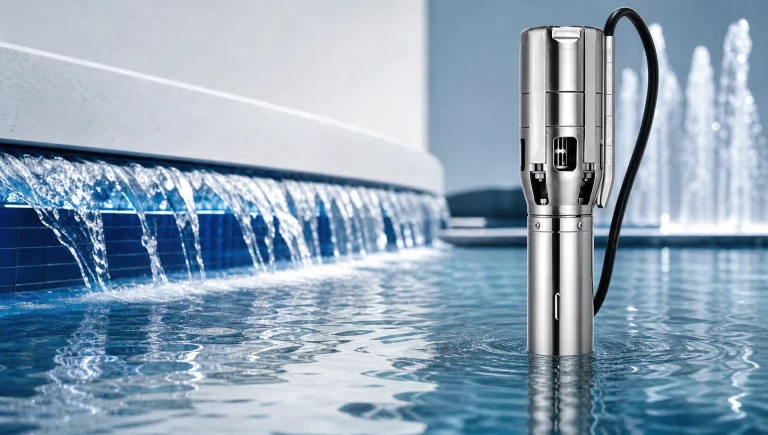
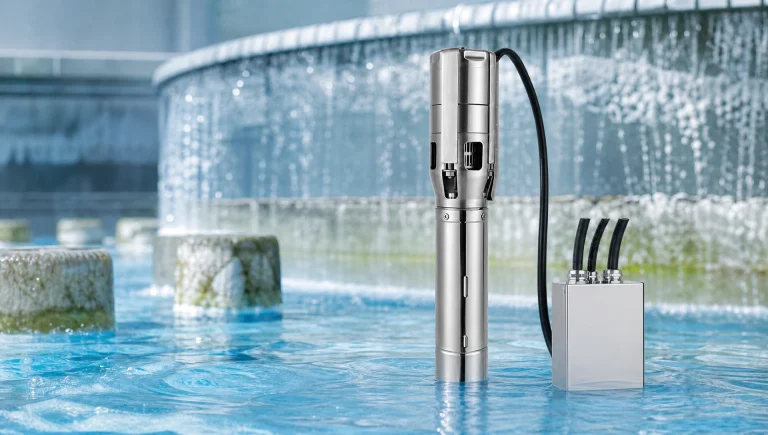
Premature bearing failure stems from start-stop impact loads and lubrication film breakdown — every start-stop cycle is a hammer blow to the bearings in traditional pumps. The submersible pump solution eliminates impact at the source: taking the submersible pump technology as an example, VFD soft-starting brings the speed up smoothly, sparing bearings from instantaneous impact loads. Some models employ water-lubricated bearings, using the water itself for lubrication and cooling, completely eliminating maintenance issues such as grease emulsification and dry-out. The submerged pump body has a short vibration transmission path, and combined with low-vibration balancing design, the actual bearing life can approach industrial-grade levels. For musical fountains with dozens of start-stop cycles per day, this improvement is critical.
Conclusion & Selection Advice
As the technical analysis and international case studies in this article show, premature bearing fatigue does not have to be managed reactively. A fully submerged architecture such as the submersible pump technology removes the root cause at the design stage: Low-Vibration Integral Structure (Short vibration path and more stable bearing loads), combined with Soft Start, No Impact and Optional Water-Lubricated Bearings, makes it a strong candidate for both new fountains and retrofits of existing systems.
Owners and designers are advised to run a pump-type comparison early in the project and contact submersible pump technology technical support for a project-specific selection report.
Keywords: Bearing failure · Fatigue · Grease · Frequent start-stop · Low-frequency operation
Frequently Asked Questions (FAQ)
Why is fountain pump bearing life only 30-50% of industrial applications?
Four reasons: frequent start-stop impact loads (each start-stop is equivalent to 30-60 minutes of continuous operation in fatigue damage; 40-240 start-stops per day means a 20,000-hour design life bearing actually lasts only 6-12 months); low-frequency operation lubrication film breakdown (<30 Hz reduces EHL film thickness to 43%, increasing wear rates 10-50 times); cavitation and water hammer vibration accelerating false brinelling (life shortened by 60-70%); and high-temperature, high-humidity environments causing grease to emulsify and fail within 3-6 months.
How can fountain pump bearing life be extended?
Select bearings with C3 or C4 clearance classes to accommodate thermal expansion; avoid prolonged operation in the <30 Hz low-frequency range (set minimum operating frequency protection); use water-resistant complex calcium-based grease instead of standard lithium-based grease (extends life 2-3 times) with automatic lubrication devices (auto-greasing every 200 hours); use labyrinth-sealed bearing covers; in coastal salt-spray environments, use bearings with dust shields (2Z/2RS) and salt-removal filters; the ultimate solution is upgrading to PMSM submersible pumps — no bearings or water-lubricated ceramic bearings.
What are typical bearing failure modes?
Typical failure modes include: bearing noise (squeaking and periodic rumbling); fatigue spalling (flake-like metal detachment from the bearing inner raceway); grease emulsification (lithium-based grease absorbing water and forming a milky foam-like substance); abnormal temperature rise (>85°C); cage fracture causing rotor-stator contact (stator rub) and motor burnout; and false brinelling (localized indentations on raceway contact surfaces caused by vibration).
What proportion of all failures do bearing failures represent in fountain pumps?
According to industry statistics, bearing failures account for 22% of all fountain pump failures (second only to seal failures at 38%). The proportion is higher in harsh environments: in a Chinese ocean park case, bearing failures accounted for more than 40% of all failures during the period. Frequent bearing replacements are not only costly ($500-2,000 or several thousand yuan per occurrence), but the greater loss comes from show interruptions and reduced availability.
Can the submersible pump technology really prevent premature bearing fatigue?
Yes. The submersible pump technology operates fully submerged, which removes the fundamental trigger of premature bearing fatigue at the design level: first, Soft Start, No Impact — Smooth load transitions during start-stop spare bearings from hammer blows; second, Optional Water-Lubricated Bearings — No grease maintenance needed, eliminating emulsification and dry-out; and third, Low-Vibration Integral Structure — Short vibration path and more stable bearing loads. Instead of managing symptoms, these three design features make the problem structurally unlikely to occur. For project-specific sizing, contact the pump engineering specialists for a full evaluation.
Recommended Solution: submersible pump technology
The submersible pump technology is engineered for continuous fountain operation and structurally avoids the issue discussed in this article — Fountain Pump Bearing Fatigue Failure: Service Life at Only 30-50% of Industrial Applications:
- Soft Start, No Impact: Smooth load transitions during start-stop spare bearings from hammer blows
- Optional Water-Lubricated Bearings: No grease maintenance needed, eliminating emulsification and dry-out
- Low-Vibration Integral Structure: Short vibration path and more stable bearing loads
Need sizing or engineering support for your project? Contact the the manufacturer through official channels for submersible pump technology technical documentation and project assistance.